
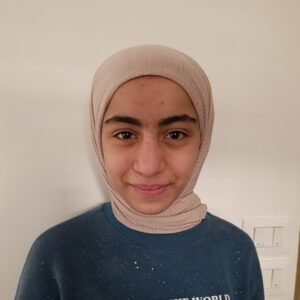
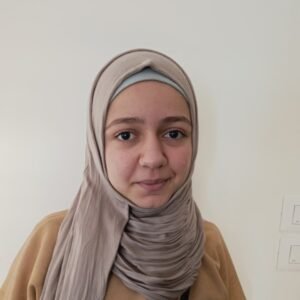
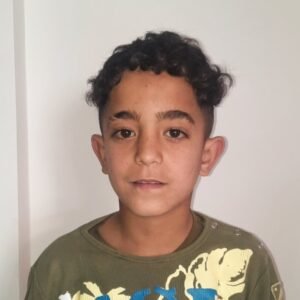
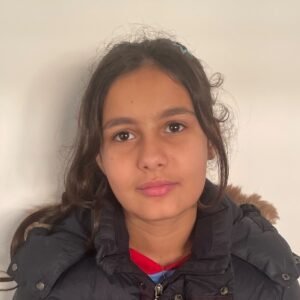
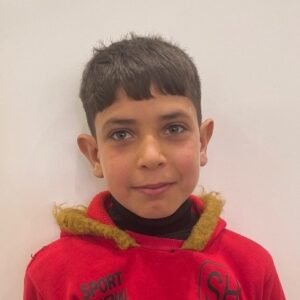
My name is Zahraa
I am 16 years old
I am Syrian!



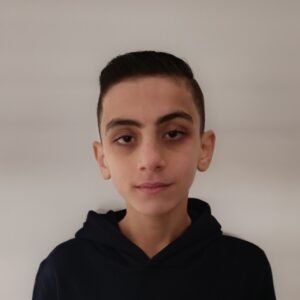
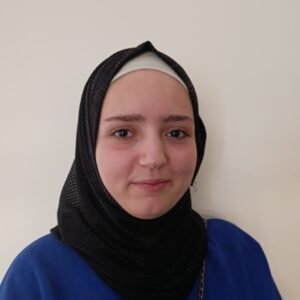
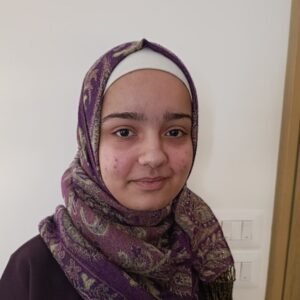
Sponsorship is designed to keep practical support present as a child grows.
Depending on the child’s context and program arrangements, that support can contribute toward essential needs such as education, healthcare, clothing, food, school materials, and other everyday requirements identified through MWL’s sponsorship work.
The value of sponsorship is not one isolated intervention. It is the continuity of care around a child over time.
9,358 children supported through MWL sponsorship in 2025.
Comprehensive Care Your sponsorship will provide the following: cash assistance, food, clothing, healthcare, education, school supplies, psychosocial and recreational support, and caregiver early recovery activities. Alongside those an orphan with receive year-round and seasonal support such as annual health checks, community center activities, Ramadan food baskets and iftars, Eid clothing, Qurbani distribution, back-to-school supplies, winter clothing, caregiver skill-building, and community carnivals.
After your sponsorship begins, you will receive a welcome confirmation and access to sponsorship updates through MWL’s donor communication channels.
MWL aims to provide quarterly updates so sponsors can remain connected to the child they support. In some locations, updates may take longer when access, security, or local conditions affect field communication.
Sponsorship is designed to create continuity for the child and meaningful visibility for the sponsor.
You select a child from the available sponsorship profiles and begin a recurring sponsorship. Your support is then connected to that child through MWL’s sponsorship program, helping maintain continuity around their essential needs over time.
Sponsorship can contribute toward essential areas of a child’s life such as education, healthcare, food, clothing, school materials, and other everyday needs identified through the program.
Yes. Unlike the General Orphan Fund, which supports MWL’s wider orphan-care work, child sponsorship is designed around sustained support connected to an individual child.
Yes. The current sponsorship platform allows you to browse available child profiles and filter by factors such as nationality, age range, and gender before making your selection.
MWL aims to provide sponsors with quarterly updates. Timing may occasionally vary where field access, security conditions, or communication challenges affect how quickly information can be collected and verified.
You will receive confirmation that your sponsorship has started, followed by access to the available sponsorship updates and communications associated with the child you support.
Yes. Where multiple sponsorships are available through the platform, you may choose to support more than one child.
Sponsorship is intended to provide continuity, but circumstances can change. Sponsors can contact MWL for assistance with changes to their recurring sponsorship arrangement.
A child may leave the sponsorship program for different reasons, including changes in family circumstances, age, relocation, or other program considerations. If this happens, MWL will communicate the change and explain the available next steps.
Support is guided by the child’s circumstances, local program context, and needs identified through MWL’s sponsorship and field processes. The aim is to keep support practical and relevant as the child grows.
No. Education is an important part of childhood, but sponsorship is designed around wider everyday needs that may also include health, food, clothing, and other forms of practical support.
Sponsor a Child creates sustained support connected to one child. The General Orphan Fund pools contributions across MWL’s broader orphan-support work so assistance can respond flexibly across different children, households, and needs.
Yes. If you prefer not to begin an individual recurring sponsorship, you can contribute to the General Orphan Fund, which supports MWL’s broader orphan-care programming.
Child information and communications should be handled in line with MWL’s safeguarding and privacy practices. Public profiles and sponsor communications should share only what is appropriate for the child’s safety and dignity.
Direct contact should take place only through the communication channels and safeguarding processes established by MWL. This helps protect the privacy and safety of both the child and sponsor.
Because children grow through changing stages and needs. Consistent sponsorship helps keep support present beyond one moment, giving a child greater continuity through school, health, and everyday life.
This Zakat policy sets out how Mercy Without Limits seeks to fulfil the Shariah requirements of receiving and administering Zakat payments on behalf of Muslims.
This document is intended to be the Policy Document to provide a framework for future Zakat distribution.
INTRODUCTION TO ZAKAT
Zakat is the third of five core pillars of Islam and by Qur’anic ranking, is next after Prayer in importance. It has been interlinked with Prayer 28 times in the Qur’an. The distribution of Zakat and its use has been outlined in the Qur’an, demonstrated in the prophetic traditions and explained further by the Islamic scholars of the past and present.
The following verse outlines the recipients:
“Sadaqah (Zakat) is for the poor and for the needy and for those employed to collect [Zakaat] and for bringing hearts together [for Islam] and for freeing captives [or slaves] and for those in debt and for the cause of Allah and for the [stranded] traveller – an obligation [imposed] by Allah. And Allah is Knowing and Wise.” (Quran 9:60)
The above verse singles out eight types of people deemed eligible to receive Zakat. They have been identified as:
• Al-Fuqara’ (The poor)
• Al-Masakin (The needy)
• Al-Amilina Alayha (Administrators of Zakat)
• Al-Mu’allafah Qulubuhum (Reconciliation of Hearts)
• Fir-Riqab (those in Bondage)
• Al-Gharimin (Those in Debt)
• Fī-Sabilillah (In the Cause of Allah)
• Ibn al-Sabil (The Wayfarer)
USE OF ZAKAT PAYMENTS
Zakat payments made to Mercy Without Limits are allocated to a segregated general Zakat fund held by Mercy Without Limits. The Zakat funds are used to support Zakat-eligible projects in the Muslim-majority countries in which we operate.
A maximum of 12.5% of Zakat payments is allocated towards the administrative and support costs of Mercy Without Limits.
ADMINISTRATION OF ZAKAT PAYMENTS
Mercy Without Limits will administer payments of Zakat as follows:
• Zakat payments by givers who select the Zakat option on Mercy Without Limits. payment platforms are marked and identified.
• Zakat payments are paid into dedicated, interest free bank accounts, where the funds will be held until being sent to the relevant countries for implementation of Zakat-eligible projects.
• Zakat payments are utilized within one lunar year in accordance with Shariah rules.
• Where we can uplift the amount given through recognized schemes such (Matching fund) we will treat any uplift as an unrestricted donation which may be used to support our Zakat-compliant project work, without any deduction from the amount of any Zakat given to Mercy Without Limits.
COMPLIANCE
Mercy Without Limits uses the following procedures to ensure that we comply with this Zakat policy:
Qualitative screening criteria:
All applicants must fulfil the following criteria:
1. The applicant must be Muslim
2. The reason for applying to Mercy Without Limits must be Shariah compliant.
3. The beneficiary must be an individual in need and not just a service. Zakat cannot be used to fund services to people directly unless the beneficiary consents to using their Zakat payment to fund a service.
4. The applicant cannot be an immediate family member of any Zakat payer through Mercy Without Limits.
5. Mercy Without Limits trains and supports its staff on the practical application of the principles of Zakat to ensure compliance with all the Shariah requirements.
6. Specially trained staff at Mercy Without Limits work on project delivery and its effect on recipient communities in-country.
7. Our policies and procedures will be subject to an independent annual review by board to ensure that the Zakat fund is operated in accordance with the principles of Shariah.
REPORTING
Transparency in respect of our compliance with Zakat principles is of foremost importance to Mercy Without Limits. Our reporting process in relation to Zakat will focus on several key areas:
1. We will demonstrate how our program activities have been selected and remain in line with beneficiary and activity guidelines for Zakat compliance.
2. We will account for and report on compliance with our policy to restrict administrative costs to a maximum of 12.5% of any Zakat given through our annual reporting process.
3. We will provide further comprehensive evaluation including the provision of visual reporting to the extent possible.